
IT Mapping
Mapping your IT system to face cyber threats: from the urgency to document to the art of anticipating risks
Mapping your IT system has become critical for anticipating cyber threats, meeting regulatory requirements, and steering your architecture in real time.

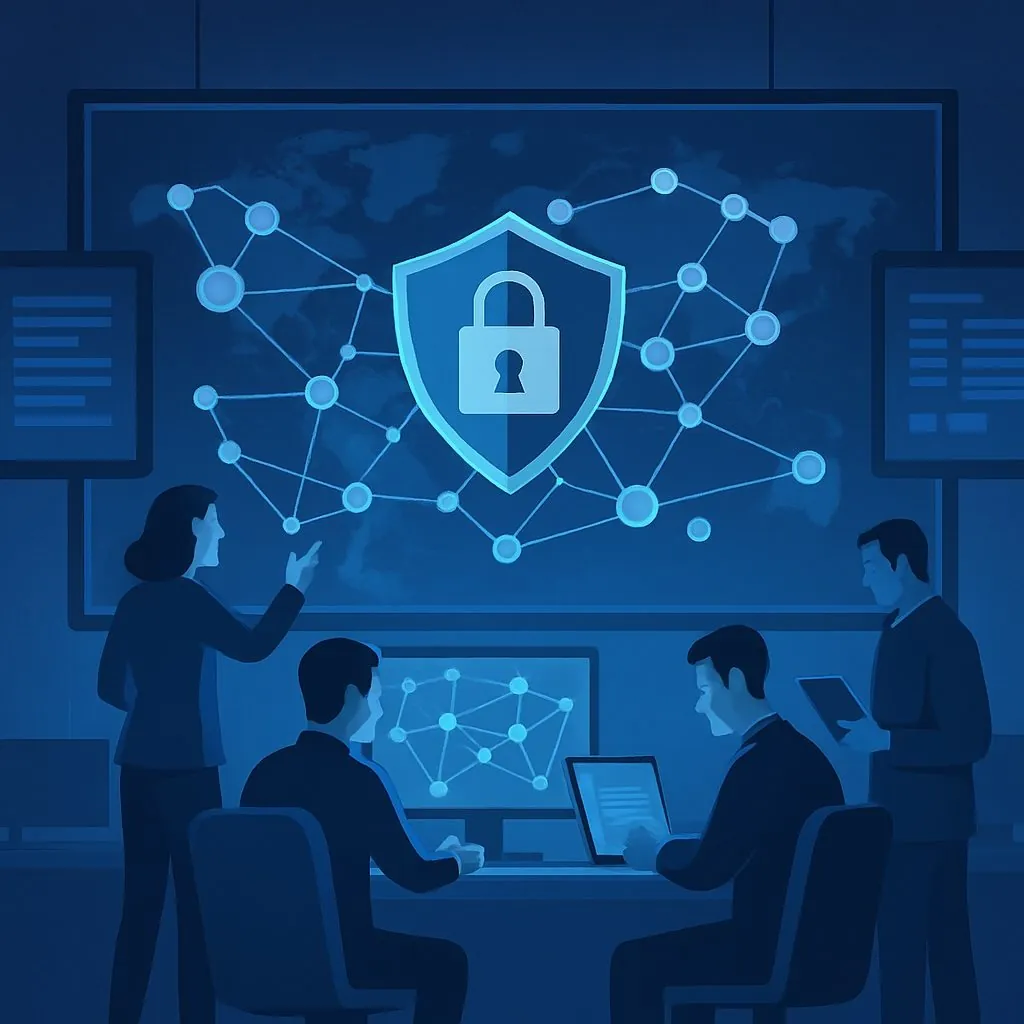
Mastering your IT system has never been more critical
In a world where the complexity of IT systems keeps growing, CIOs face unprecedented pressure: ensuring the security, compliance, and agility of their architectures, while being ready at any moment to respond to a critical incident.
To meet these challenges, a clear and up-to-date IT system map has become an essential tool. It allows organizations to visualize interdependencies, identify vulnerabilities, and steer architectural decisions with full awareness. Yet in many companies, this exercise remains occasional, often handcrafted, sometimes outsourced, and rarely kept up to date. The result: a partial and fragmented knowledge of the IT system, struggling to meet operational and regulatory demands.
A process that is often slow and costly
Today, when a company (especially a large account) wants a reliable map of its IT system, it typically turns to external services delivered by consulting or audit firms. This process, based on interviews, document reviews, and manual modeling in PowerPoint or Excel, consumes significant internal resources, for a result frozen at a single point in time and often far from exhaustive.
Around 70% of companies consider that updating their IT system map is too heavy to be done more than once a year. This inertia is incompatible with the speed at which the IT system evolves daily, and especially with today’s security and compliance demands.
A challenge that has become strategic
With the upcoming entry into force of the NIS2 directive, the rules of the game change radically: companies must be able to declare a cyber incident within 24 hours and produce a full impact report within 72. This level of requirement turns mapping into a strategic lever. It is no longer a simple documentation effort, but the ability to understand your IT system in depth and in real time.
Moving from a reactive to a proactive posture
In this context, traditional tools reach their limits. Excel files, static diagrams, or internal wikis offer neither up-to-date visibility nor the required responsiveness. As for system configurations, their granularity is often too technical to be efficiently exploited by business or security functions.
Companies need a connected and contextualized view of their IT system: knowing which services communicate with each other, what data flows where, which components are critical, and where potential failure points lie. All without waiting for a yearly audit whose results will, in any case, be too vague and almost certainly already outdated.
Uncia, a platform built for action
This is exactly where Uncia comes in. Designed by IT architects for CIOs, CISOs, and architecture leads, the platform offers a standardized model of the IT system, integrating all infrastructure components, flows, network zones, and dependencies.
Every change is analyzed in real time: compliance of architectural decisions, detection of risk areas, alerts on security or governance gaps. In case of an incident, Uncia lets you immediately identify impacted applications, critical dependencies, entry points, and the relevant owners.
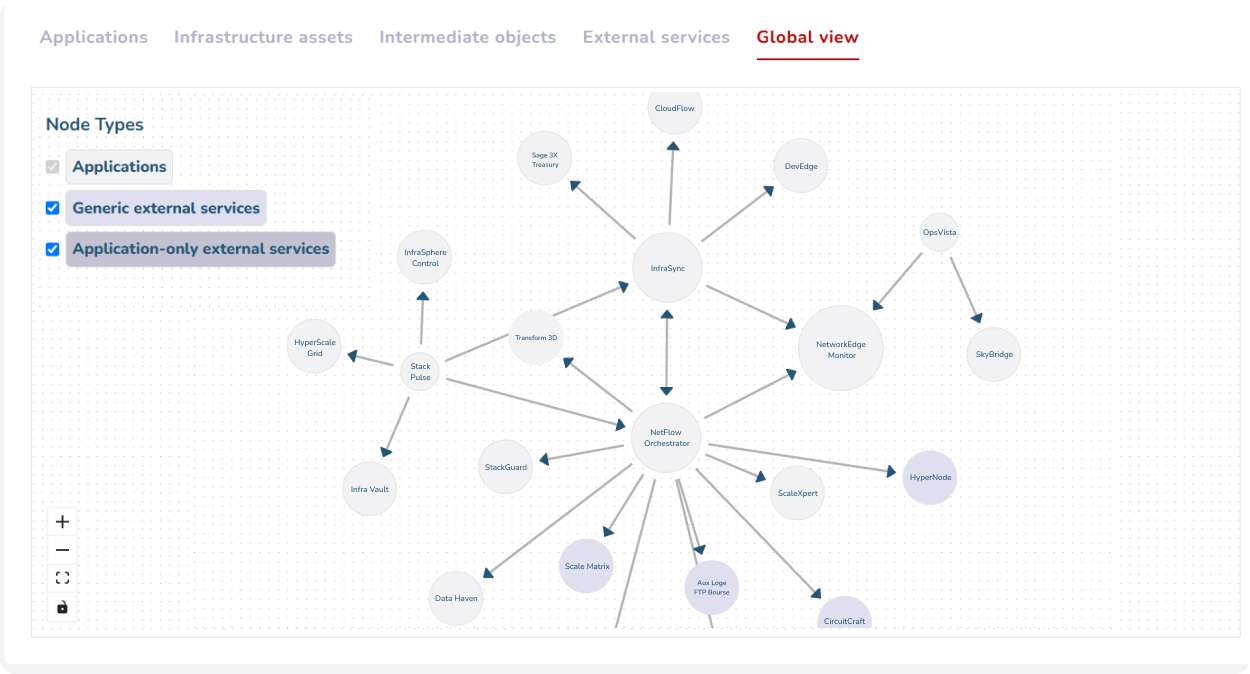
Global IT system map in Uncia
A concrete answer to regulatory expectations
Frameworks like ISO 27001 or the ANSSI requirements around NIS2 now demand clear, up-to-date, and actionable documentation. Uncia fully meets these expectations while simplifying daily operations: less information scattering, less reliance on tribal knowledge, more clarity and shareability.
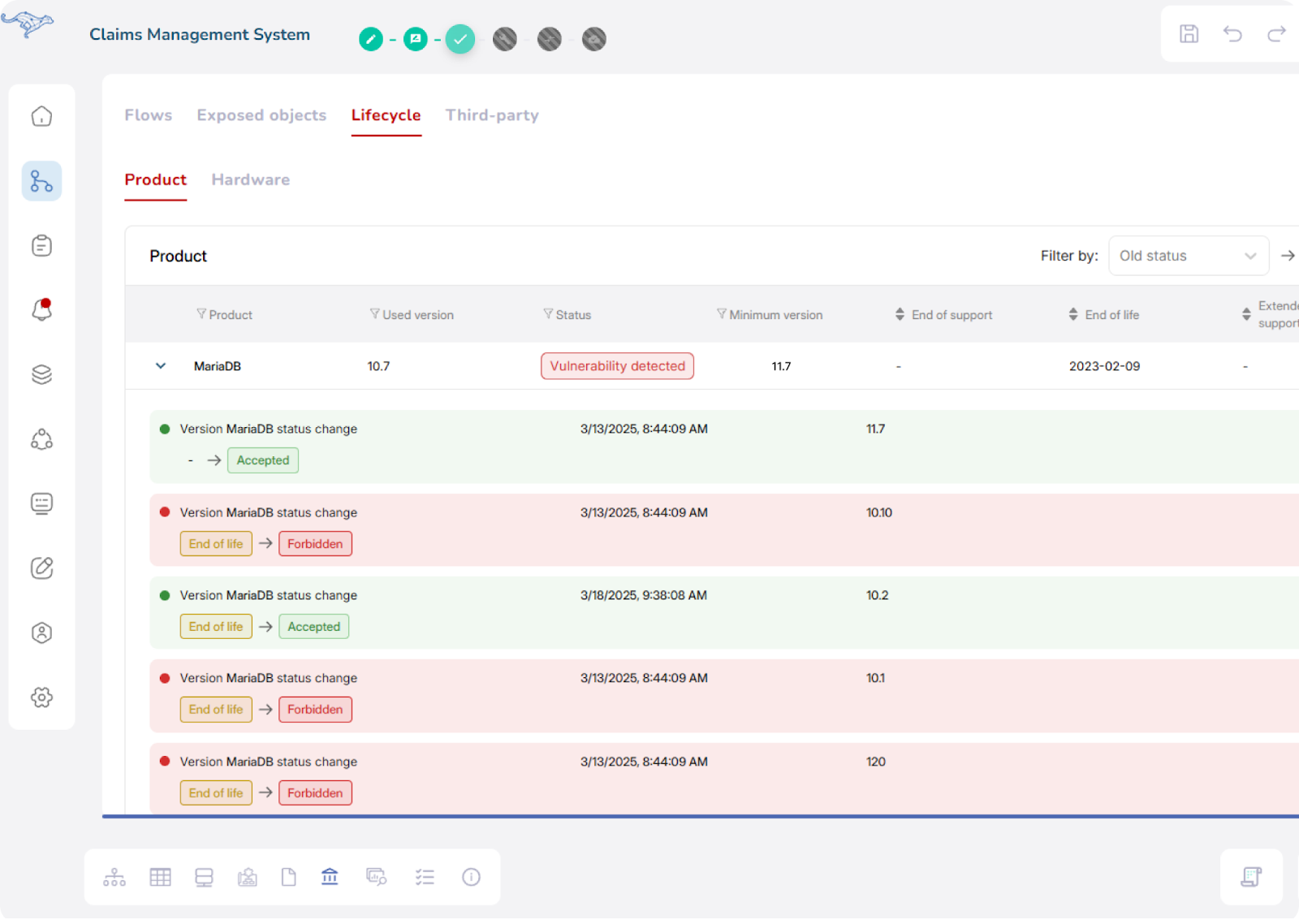
Compliance report in Uncia
A foundation to go further
Beyond compliance, the structure Uncia provides opens the way to strategic initiatives: Green IT, application portfolio rationalization, obsolescence management, or end-to-end IT system steering.
Uncia turns technical architecture documentation from a burden into a competitive advantage. It is a platform for steering, collaboration, and anticipation, an essential building block for mastering your IT system, today and tomorrow.